



Quick answer
GetFeedback Direct sunsets December 31, 2026. For B2B companies evaluating alternatives, the right choice depends on what the program actually needs: a Salesforce-native survey tool, a broader enterprise platform, or an account-level NPS solution tied to revenue. SurveyMonkey Enterprise is the default migration path, since SurveyMonkey owns GetFeedback. For B2B teams whose business runs on accounts, CustomerGauge keeps the Salesforce integration and adds account-level measurement.
GetFeedback Direct is sunsetting. Here is the decision in front of you.
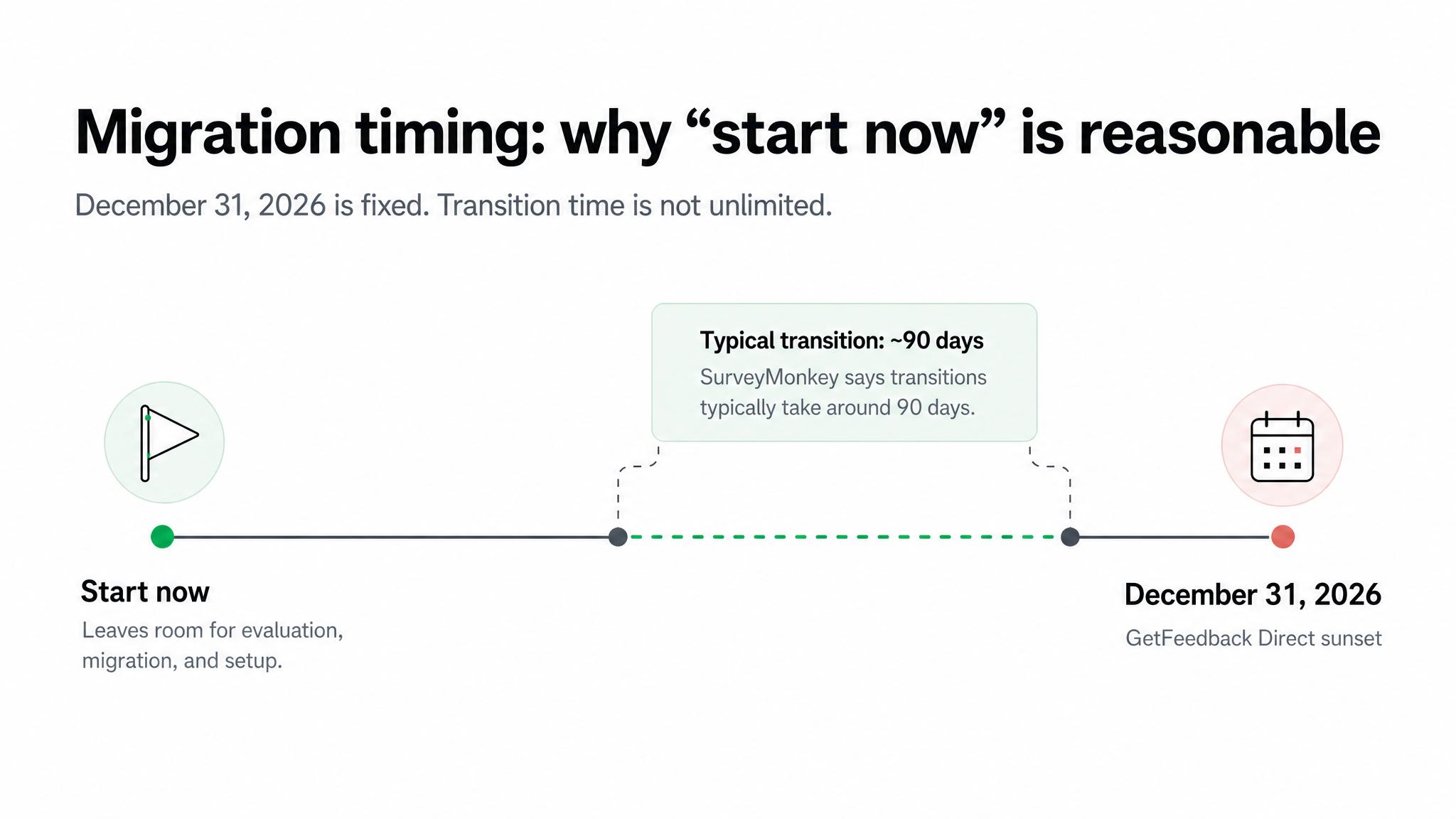
SurveyMonkey has announced that GetFeedback Direct will be retired on December 31, 2026. If your B2B feedback program runs on GetFeedback Direct, that date is now a deadline. Sometime before the end of the year you have to move your surveys, your Salesforce integration, and your response history somewhere else.
Most treat this as a tooling question: “To which survey tool do I switch?” It’s not quite that simple.
A forced migration represents an opportunity for strategic evaluation. You are going to rebuild your feedback setup anyway, so it’s the perfect time to examine if the system you had in place was the correct one to begin with.
This guide covers the three paths B2B teams have available. The pressing concern for every GetFeedback Direct team is the Salesforce connection. Migrating from GetFeedback does not mean you will lose Salesforce integration. More on that below.
A note before we dive in. We will be precise about which GetFeedback product we mean, because most pages are not, and the difference changes everything.
First, make sure you are on the product that is sunsetting
GetFeedback is two products, and only one of them is going away.
GetFeedback Direct is the Salesforce-integrated survey product. If you send NPS, CSAT, or relationship surveys that write back into Salesforce, you are on Direct. That is the product retiring December 31, 2026, and the one this guide is about.
GetFeedback Digital, formerly Usabilla, is the website and in-app feedback product. If your feedback comes from on-page widgets and in-product prompts rather than Salesforce-integrated surveys, you are on Digital, and Digital will continue.
The quick test: Salesforce-integrated surveys means Direct. Website and in-app feedback means Digital. If you are on Direct, read on. If you are on Digital, your tool is not sunsetting this year, though best to keep an eye on where SurveyMonkey steers the broader portfolio.
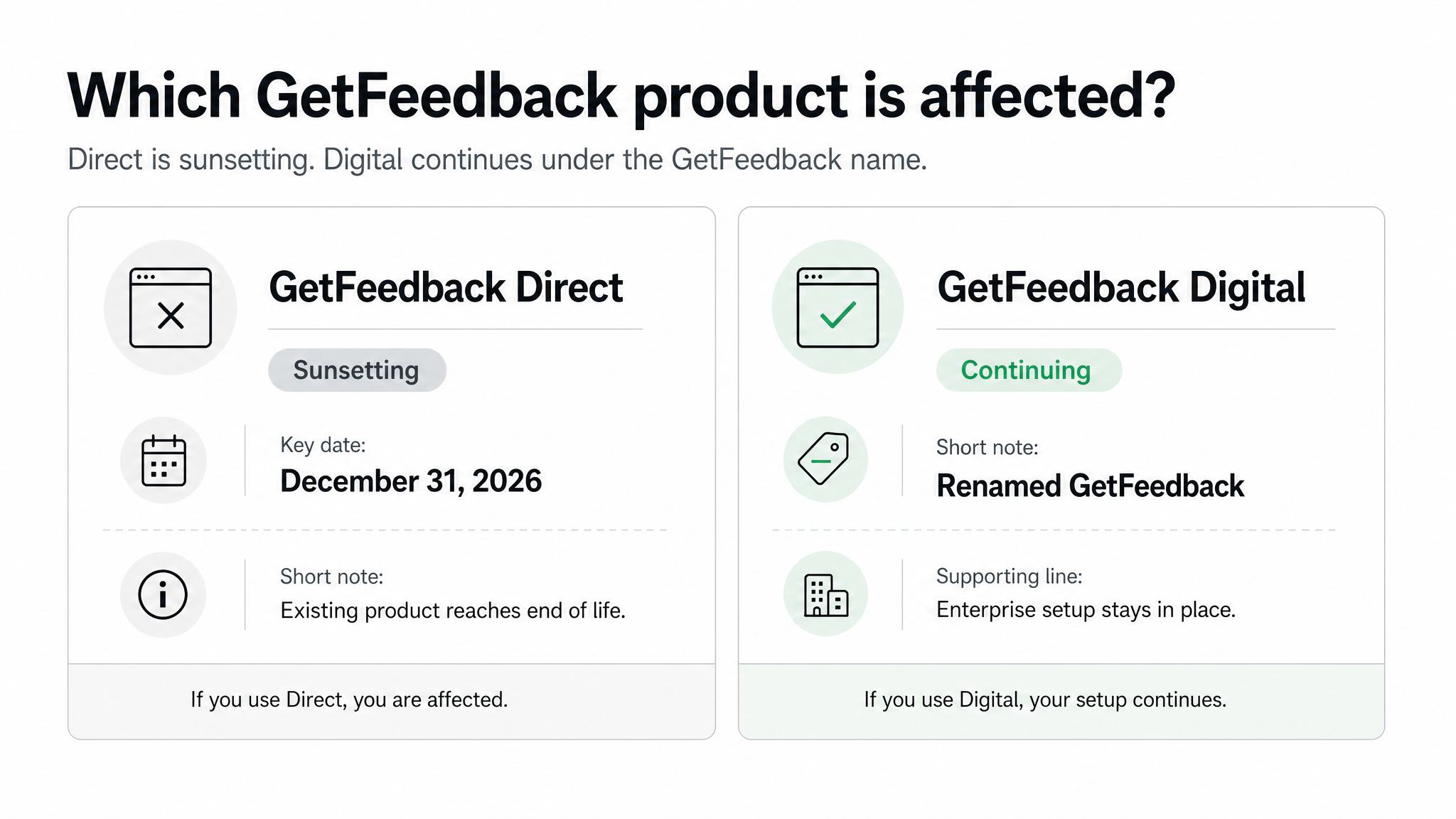
Everything that follows is about specific alternatives for GetFeedback Direct users.
The three options B2B teams are choosing between
When a GetFeedback Direct team looks to migrate, the field sorts into three real options. Two of them are survey-tool swaps. One of them is a program upgrade. All three are legitimate for the right team, so here is a clear read of each.
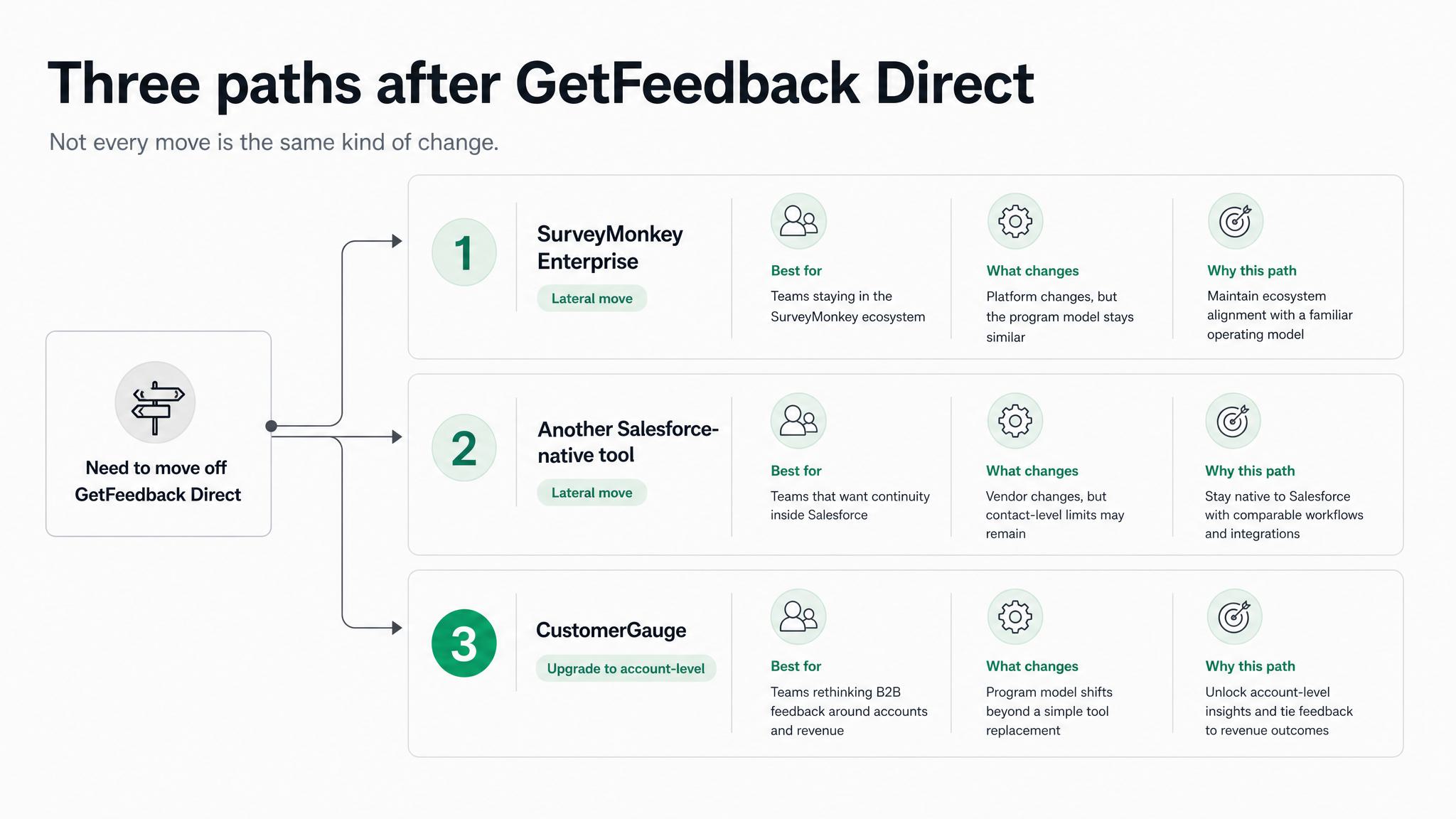
Option 1: Migrate to SurveyMonkey Enterprise
This is the default path, and SurveyMonkey's own recommendation, since GetFeedback is a SurveyMonkey product.
The Salesforce-native integration carries over, so the data-locality you relied upon stays intact. The survey toolkit is broader than what most Direct teams were using. And the switching friction is the lowest of any option, because you are staying inside the same vendor ecosystem.
However, there are limitations. SurveyMonkey Enterprise is survey-tool-first, not CX-platform-first. Its center of gravity leans toward higher-volume, B2C-style use cases, and it is a larger and more complex product than what a focused GetFeedback Direct team was running. You are getting more bells and whistles, not a different model of measurement.
For many teams that is exactly right. If your feedback program was working and it simply needs a new home, particularly if you are SMB or mid-market without account-tier complexity to solve, this is a sensible, low-drama move. It changes your address, not your method.
Option 2: Migrate to another Salesforce-integrated survey tool
The Salesforce AppExchange has several survey tools built to slot into the spot GetFeedback Direct held. Zonka Feedback, SurveyVista, Responsly, and others sit here.
These are lift-and-shift moves; simple and relatively cheap. Your survey logic and your Salesforce integration carry over in roughly the same shape, often at a lower price than SurveyMonkey Enterprise. For a team that liked the GetFeedback Direct model and wants the closest thing to it, this is a clean swap.
For an SMB team with no B2B account-tier complexity to address, it is a perfectly viable place to roost.
However, if your business is account-based, a lateral move from one Salesforce-native survey tool to another does not fundamentally change what you measure. You are trading one tool that surveys individuals for another tool that surveys individuals. The Salesforce integration solves where the data lives. It does not solve who the data represents. We will come back to why that distinction is the whole ballgame for B2B CXM.
Option 3: Seize the moment to upgrade the program itself
This is where CustomerGauge lives, and where real Account Experience comes in.
Start with the reframe. The deadline is a forced decision, not an emergency. You have months, not days, and you are going to rebuild your setup regardless. So the question worth asking is whether to rebuild the same program in a new tool, or to move the program from piecemeal contact-level NPS to a full account-level NPS: from survey-as-output to revenue-tied feedback as an input for the business, from a catch-all dashboard the CX team reads to granular reporting a CFO can act on.
Now the part that matters most to a GetFeedback Direct team: you will not lose your Salesforce integration. CustomerGauge has a full bilateral-object Salesforce sync out of the box. The integration that was GetFeedback Direct's raison d’etre is not something you give up when you migrate. CustomerGauge’s account-level upgrade natively builds on top of your Salesforce connection.
This is the option for teams whose revenue is account-based and whose current measurement has not been cutting the muster. It is not the right answer for everyone, and we will be clear about that in the alternatives below. But if you have ever sat in a renewal that went sideways while your NPS looked fine, this is the gap that explains it, and the deadline is the cleanest opportunity you will get to close it. The full argument is below.
Why contact-level NPS breaks in B2B
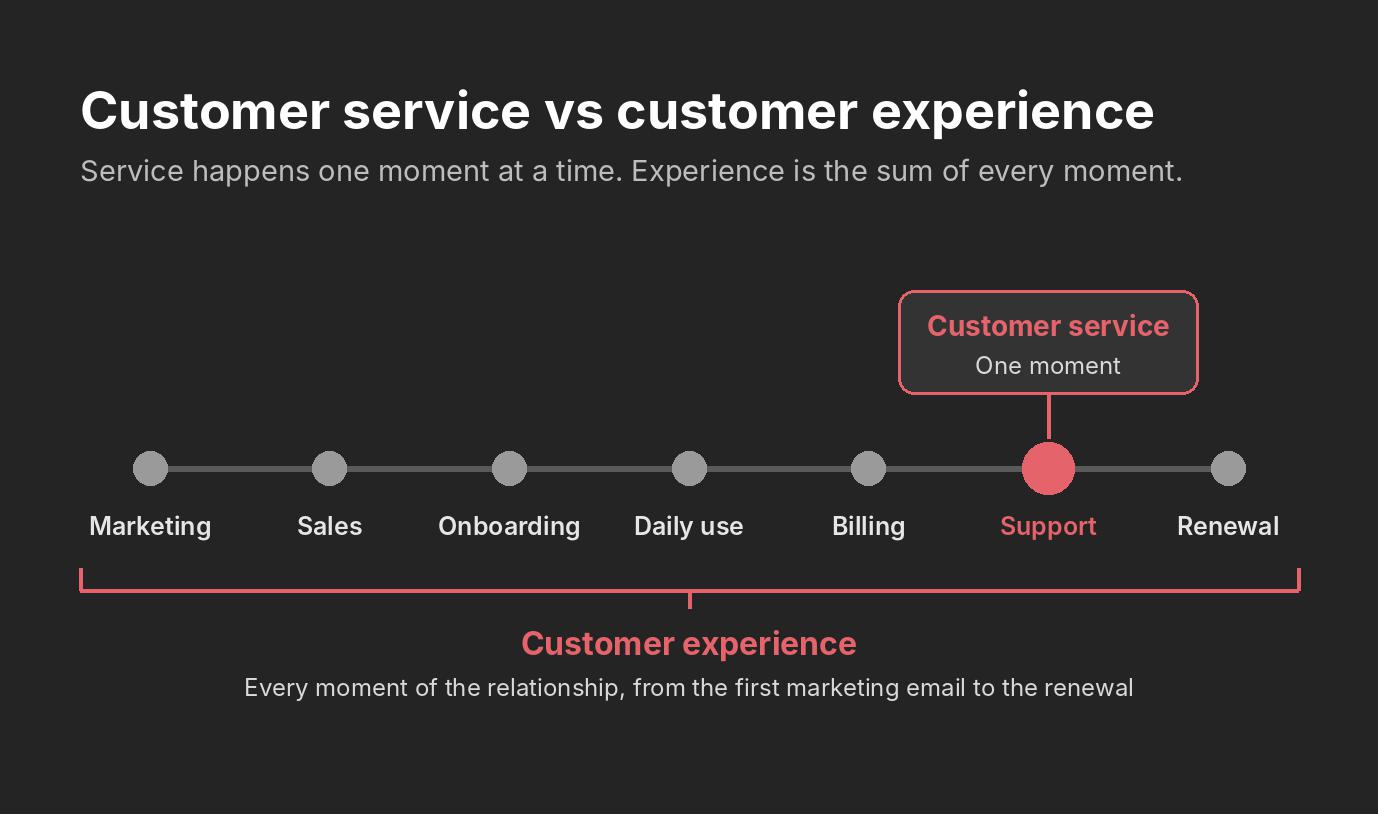
In B2C, a customer is usually one person and one survey. You sell to that person, they answer, and the score means what it says. B2B is not built that way. The thing you renew is an account, usually a complex one, and an account is a group of people who do not always see eye-to-eye.
That structural fact is what breaks single-respondent NPS in B2B, and it breaks it in three specific ways.
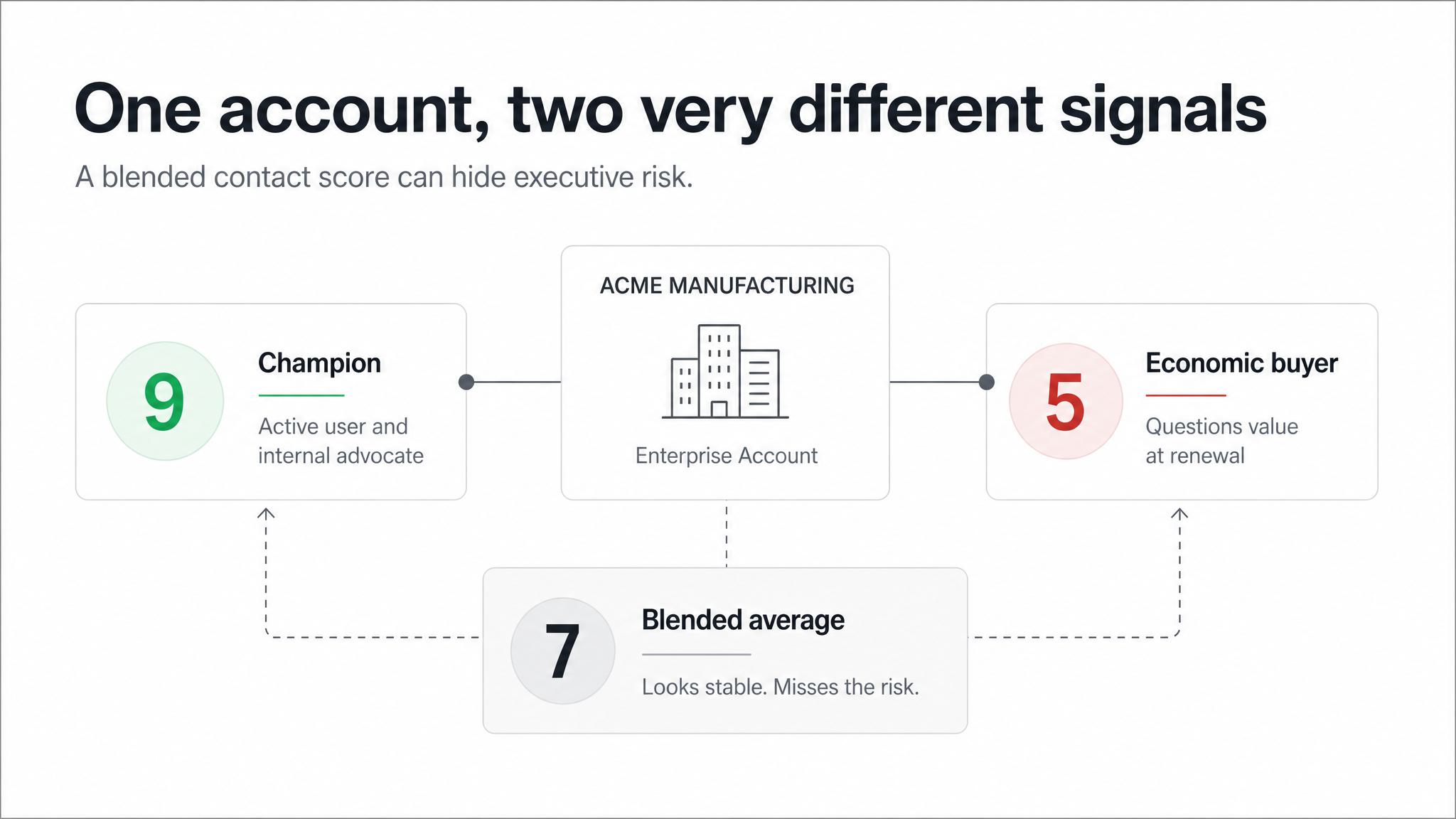
The “champion” loves you while the executive is preparing to fire you. The person who answers your survey is usually not the person who signs the renewal. A day-to-day champion can score you a 9 or a 10 because the product makes their job easier, while a member of the buying committee is already building the case to cut the contract on price. Contact-level NPS shows you the love and misses the bigger picture. You find out at contract renewal, the worst possible time.
Salesforce integration alone does not fix it. GetFeedback Direct's strength was its Salesforce integration, and that integration solved a genuine problem: responses lived in the right place, attached to the right records. What it did not solve is account aggregation. Surveys still went to individuals, responses still came back from individuals, and the account-level picture still had to be reconstructed by hand in a spreadsheet or manual report. Option 2, a lateral move to another Salesforce-native survey tool, inherits this exact gap. Salesforce-native is necessary, but in B2B World, it’s often not enough. That gap is precisely what CustomerGauge was built to bridge.
The account-level signal goes missing. When measurement lives at the contact level, a large strategic account and a tiny one count the same in your average. A single happy user can mask an entire committee that is unhappy. Disagreement inside an account, which is the most valuable early-warning signal you have, gets averaged away.
What changes when NPS lives at the account level is the opposite of all three. Surveys go to multiple stakeholders on the same account by design. Aggregation logic surfaces disagreement, so you can see when the champion, the purchaser, and the economic buyer score you differently. Larger accounts move the metric in proportion to the revenue they represent. And the output is built for an executive readout, so the CFO can answer "what is our CX program actually worth?" with hard numbers.
The shift that matters most here is from response rate to engagement. A contact-level program chases response rate as a headline number, and a high response rate from the wrong respondents tells you very little about whether an account renews. An account-level program cares less about how many people answered and more about whether the people who decide the contract are engaged at all. Silence from an economic buyer is itself a signal. Counting it as a missing response rather than a warning is how B2B teams get surprised by contract cancellations. This is the same reframe we make for any B2B team measuring at the account level, and it is the one that changes how leadership reads the report.
The champion loves you. The executive is firing you. Contact-level NPS only sees the first one.
GetFeedback alternatives: five options for B2B teams
Here is a closer read on the tools in the field, ordered with the account-level option first. Each entry is a strengths-and-limits read, not a ranking dressed up as advice. Updated June 2026.
1. CustomerGauge. B2B account-level CX, revenue-tied, with the Salesforce integration preserved through an out-of-the-box bilateral-object sync. Best for B2B companies whose revenue concentrates in a set of accounts and whose current measurement still runs at the contact level. Strengths: surveys distributed to multiple stakeholders on the same account, aggregation that surfaces disagreement inside that account rather than averaging it away, weighting that lets large accounts move the metric in proportion to the revenue they carry, and reporting built for a finance-grade readout. The Salesforce sync maps to your existing objects, so the connection that anchored your GetFeedback Direct program carries forward instead of being rebuilt from scratch. Limitations: it is more than a small team with simple needs requires, and it asks you to treat feedback as an input to the business rather than a survey you send and file. The move rewards teams willing to think about measurement, not just collection. Versus GetFeedback Direct: keeps the Salesforce connection you relied on, and adds the account-level layer Direct never had.
2. SurveyMonkey Enterprise. SurveyMonkey's own recommended path for teams leaving GetFeedback Direct. Best for programs that were working and simply need a new home, particularly SMB and mid-market B2C teams without account-tier complexity to solve. Strengths: the Salesforce-native integration carries over, the survey toolkit is broader than what most Direct teams used, and because you stay inside the same vendor the switching friction is the lowest of any option here. There is also continuity in support and billing that a same-vendor move tends to buy you. Limitations: it is survey-tool-first rather than CX-platform-first, its center of gravity leans toward higher-volume and B2C-style use cases, and it is a larger, more complex product than a focused Direct team was running, so you may be adopting more tool than the program needs. Versus CustomerGauge: the same survey model in a bigger box, not a move to account-level measurement.
3. Qualtrics CustomerXM. A broad enterprise experience platform that reaches well beyond CX into employee, brand, and product experience. Best for large organizations that want one platform across many experience programs and have the budget and the team to run it. Strengths: deep, highly configurable, enterprise-grade, with analytics and program tooling that few competitors match. Limitations: the scope and the price tend to exceed what a focused GetFeedback Direct team needs, implementation is a project rather than a switch, and the B2B account model is one capability among many rather than the spine of the product. Versus CustomerGauge: more platform than most departing Direct teams need, and not built B2B-account-first.
4. SurveyVista or Zonka Feedback. Salesforce-native survey tools built to occupy the slot GetFeedback Direct held, both available on the AppExchange. Best for SMB teams that want the closest like-for-like swap with the least disruption and the lowest cost. Strengths: lift-and-shift simplicity, survey logic and Salesforce integration roughly preserved, and a price point that is often below SurveyMonkey Enterprise. For a team that liked the Direct model and wants the nearest equivalent, these are clean choices. Limitations: they are still contact-level survey tools, so the account-aggregation gap that breaks NPS in account-based B2B carries over unchanged. You solve where the data lives, not who the data is about. Versus CustomerGauge: a faithful replacement for Direct's model, which is the right move only if Direct's model was the right model for your business in the first place.
5. InMoment or AskNicely. Established NPS and CX tools that are not Salesforce-native in the way GetFeedback Direct was. Best for teams that prioritize NPS workflow and program features over a tight, out-of-the-box Salesforce object sync. Strengths: mature NPS tooling, solid program and reporting features, and track records longer than most of the AppExchange field. Limitations: the Salesforce integration is not the bilateral-object sync a Direct team is used to, so the migration concern that matters most to this audience, keeping the Salesforce connection intact without a custom build, is the one they address least directly. Versus CustomerGauge: weaker on the Salesforce-native continuity that tends to be the first requirement for a departing GetFeedback Direct team.
What CustomerGauge actually does differently
If you have decided the moment is worth more than a lateral swap, here is what the account-level model does that a survey tool does not.
Account-level survey distribution. Surveys are designed around the fact that a B2B account has multiple respondents. Instead of one contact standing in for an entire account, distribution reaches the people who actually shape contract renewal: the champion, the day-to-day users, the purchaser, and the economic buyer. That is a different starting assumption from a contact-level survey tool, which treats every respondent as a self-contained customer. In B2B, the customer is the account, and the survey design has to begin there or the rest of the math is built on the wrong unit.
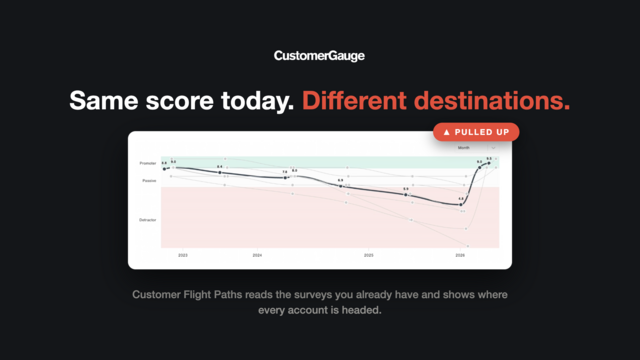
Multi-stakeholder aggregation that surfaces disagreement. Responses roll up to the account, and the aggregation treats dispersion as a signal rather than noise. When the champion scores you a 9 and the economic buyer scores you a 5, you see both, and you see it months before the renewal conversation, which is the only time it is useful to know. A single blended number hides exactly the split that predicts churn. Surfacing it, rather than averaging it away, is the difference between a metric that reports the past and one that warns you about the future.
Revenue-tied analysis and CFO-ready reporting. Scores are tied to the revenue behind them. A detractor on a small account and a detractor on your largest account are not the same risk, and the reporting reflects that. Churn risk reads in dollars, not in detractor counts. The executive readout answers the question leadership actually asks, which is what the program is worth and what is at risk, in terms a finance team accepts. That is what turns a CX program from a cost center the board tolerates into a line of evidence the board can act on.
Response rates that measure the people who decide. None of this is about chasing response rate as a headline number. It is about who answers. When surveys reach the buying committee instead of a single contact, the engagement that predicts renewal goes up. We see account-level response rates around 20 percent, against a B2B contact-survey average closer to 2 percent. What gets measured matters just as much: a contact-level tool tracks one response rate, the contact rate, while the account-level model tracks two, the contact rate and the account rate, so you can tell the difference between a few engaged individuals and an account that is participating. Responses are weighted by stakeholder, so the economic buyer who signs the renewal counts for more than a single front-line user, and the account-average NPS reflects the whole decision-making group rather than whoever happened to reply.
Signal beyond the survey. A survey is one input, not the only one. Accounts send signals all the time that never show up in a questionnaire: how they use the product, what they raise with support, how engagement trends across the people on the account. CustomerGauge brings those non-survey signals into the same account-level view, scores them, and turns them into something a CS or revenue team can act on before a renewal is at risk. This is the layer where AI is starting to do real work, reading signal at a scale no team can watch by hand and flagging the accounts that need attention.
Salesforce sync and the migration path for GetFeedback Direct teams. This subsection does double duty, because it addresses the two things a departing Direct team cares about most. First, the integration itself: CustomerGauge runs a bilateral-object Salesforce sync out of the box, mapping to your existing objects rather than requiring a custom build, so the Salesforce connection you depended on with GetFeedback Direct is preserved, not rebuilt from scratch. Second, the migration mechanics: your Salesforce-stored GetFeedback Direct response history maps into CustomerGauge, so you carry your data forward. What stays intact and what needs reformatting depends on your specific setup, which is exactly the kind of thing a migration consultation is for. Few pages on this topic address the practical migration concern at all, so we will: you are not starting your history over or reinventing the wheel.
For an at-a-glance, line-by-line view, our GetFeedback vs CustomerGauge comparison lays the two side by side. Use it as the quick complement to the read above. And if you are weighing the Delighted sunset on a parallel track, the same logic runs through our Delighted vs CustomerGauge guide.
Frequently asked questions
Is GetFeedback shutting down?
GetFeedback Direct, the Salesforce-integrated survey product, is being retired on December 31, 2026. GetFeedback Digital, formerly Usabilla, is continuing. If you run Salesforce-integrated surveys, you are on the product that is sunsetting.
What happens to my GetFeedback data after the sunset?
Your survey and response data does not have to be lost. Where it lives in Salesforce, it can be carried into a new platform. With CustomerGauge, the Salesforce-stored history maps into the account-level model so you keep your record rather than starting over. Confirm the specifics for your setup before the deadline.
Why is GetFeedback Direct being sunset?
SurveyMonkey, which owns GetFeedback, is consolidating its product portfolio and steering Direct users toward SurveyMonkey Enterprise. The retirement is a portfolio decision, not a reflection of anything you did with the tool.
What is the best alternative to GetFeedback for B2B teams?
It depends on the program. For a like-for-like survey swap, SurveyMonkey Enterprise or another Salesforce-native survey tool. For B2B companies whose revenue is account-based, CustomerGauge moves measurement from the contact level to the account level while keeping the Salesforce integration.
Should I migrate to SurveyMonkey Enterprise since they own GetFeedback?
For many teams, yes. It is the lowest-friction path and it keeps the Salesforce integration. The question to ask first is whether a bigger version of the same survey model is what your program needs, or whether the deadline is the moment to move to account-level measurement.
Can I keep my Salesforce integration if I move off GetFeedback Direct?
Yes, with the right destination. This is the fear most GetFeedback Direct teams have, and it is the easiest to put to rest. CustomerGauge keeps a bilateral-object Salesforce sync out of the box, so leaving Direct does not mean leaving your Salesforce connection behind.
Make the deadline work for you
You did not choose this migration, but you can choose what it gets you. Option 1 or Option 2 may be the right call, and if your program just needs a new home we will tell you so without flinching. But if your business runs on accounts and your measurement never quite kept up, the end-of-year deadline is the cleanest reason you will get to fix it. Option 3 is not just a strategy. It is a working platform.
Schedule your migration consultation.
For the account-level model in detail, see Account-Centric NPS, the benchmarks, and the ROI calculator.
About the Author